Cervical-swab ELISA is being developed to help identify open cattle as early as Days 16–18 after insemination
SOUTHLAKE, Texas — July 29, 2026 — BioStone Animal Health will preview the AsurBreed™ Early Open Cow Test, or OCT, at several cattle and veterinary industry events this summer ahead of a planned Fall 2026 commercial launch.
BioStone will present OCT at the Texas A&M Beef Cattle Short Course, the Academy of Veterinary Consultants Summer Conference, the National Association of Animal Breeders (NAAB) 30th Annual Convention, and the 59th Annual American Association of Bovine Practitioners (AABP) Conference. BioStone will showcase OCT at conference booths this summer and host an OCT workshop at the NAAB 30th Annual Convention. In addition, researchers from the University of Florida and Colorado State University will present a platform talk on OCT at the 59th Annual AABP Conference. Attendees will have opportunities to learn about the technology, review study findings, and discuss pilot evaluations, training, and planned launch timing.
The OCT is able to identify open cows by days 16-18 after insemination and is being developed to help cattle producers, veterinarians, artificial insemination technicians, and reproductive service teams identify open cows earlier after insemination. Earlier identification may allow reproductive teams to begin re-synchronization and rebreeding decisions before conventional blood-based pregnancy testing or ultrasound is typically performed.
Blood-based pregnancy tests are generally used around Days 27–32 or later, while ultrasound is commonly performed around Days 32–39. When an open cow is identified at these later time points, another breeding opportunity may already have been delayed.
“Identifying open cows earlier gives producers and reproductive teams more time to manage re-insemination,” said Adam Contreras, Ph.D., Director of Protein Engineering at BioStone Animal Health. “Our goal is to provide a practical tool that supports earlier re-synchronization, shortens delays between breeding attempts, and improves reproductive efficiency in beef and dairy operations.”
Developed at Colorado State University
The OCT technology was developed at Colorado State University by the Animal Reproduction and Biotechnology laboratory in collaboration with CSU STRATA and is being refined by BioStone Animal Health for commercial application in dairy and beef cows.
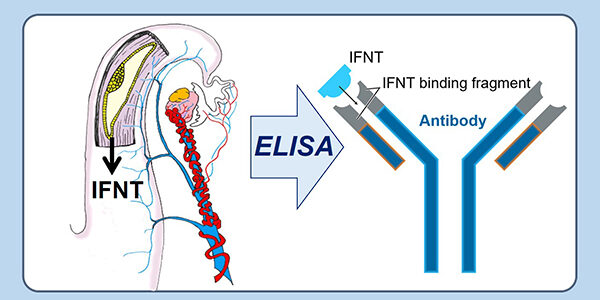
The AsurBreedTM Early Open Cow Test is designed to detect interferon tau, or IFNT, in cervical-swab samples collected on Days 16–18 after artificial insemination. IFNT is an early biological signal produced by the developing conceptus and is not produced in open cows. The IFNT is released by the conceptus into uterine fluid, which then enters and mixes with cervical fluid that can be detected with an external cervical os swab device. Published research from a Colorado State University team led by Thomas “Tod” Hansen, Ph.D., and described by Bishop and Guzeloglu et al. (2025) in Biology of Reproduction, supports the use of cervical-swab IFNT detection to determine pregnancy status for the purpose of identifying open cows and managing re-synchronization of ovulation earlier after insemination.
BioStone is developing rapid qualitative and quantitative ELISA formats, including a visually interpreted version designed to reduce the need for specialized laboratory instrumentation. Validation studies have included both beef and dairy cattle, with additional field studies ongoing in the United States and internationally.
“The ability to identify open cows earlier following insemination could help producers shorten the interval between breeding opportunities, reduce days open, improve reproductive management and reduce overall production costs,” said Thomas “Tod” Hansen, Ph.D., Professor Emeritus and Traubert Professor of Animal Genetics at Colorado State University and lead inventor of the technology. “For seasonal breeding programs such as beef cattle, acting earlier to re-inseminate cows may also provide more opportunities to establish pregnancy within the breeding season, while helping reduce the operational costs associated with delayed conception. I have been very impressed by BioStone’s commercialization efforts and the expanding validation data supporting OCT. Translating this research into a practical tool for cattle producers and reproductive professionals is an important next step.”
About BioStone Animal Health
BioStone Animal Health develops diagnostic products, reagents, and animal-health technologies for livestock, veterinary, and research applications.
For information about OCT demonstrations, pilot evaluations, training, or planned launch timing, contact:
BioStone Animal Health
2815 Exchange Blvd., Suite 400
Southlake, TX 76092 USA
+1 (817) 329-0500
sales@biostoneah.com
www.biostoneah.com