
BioStone > Autogenous Bacterin Manufacturing Services > Autogenous Bacterins Q&A
Autogenous Bacterins
Q&A
1. What are autogenous bacterins?
- Custom veterinary biologics manufactured from disease-associated bacterial isolates collected from animals within a specific herd or flock.
- Developed to address localized disease challenges.
- Used when commercial vaccines are unavailable, insufficient, or poorly matched to circulating strains.
- Focused on bovine, swine, poultry, equine, and small ruminant species.
- Autogenous bacterins can only be purchased by a licensed veterinarian or nonveterinary specialist and must be used under the direction of a veterinarian or nonveterinary specialist.
2. How are autogenous bacterins developed?
Disease Identified
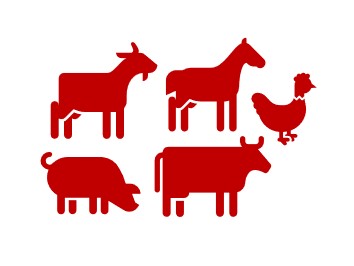
Veterinarian identifies an outbreak or recurring herd issue.
Sample Collection
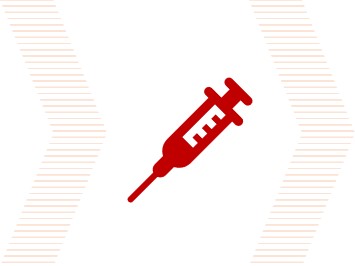
Veterinarian collects samples from affected animals.
Lab Isolation & ID
A local/university diagnostic lab isolates and identifies the disease-associated bacterium.
Veterinary Authorization
Veterinarian authorizes autogenous bacterin production.
Licensed Manufacturing
BioStone manufactures autogenous bacterins at its USDA-licensed facility in Grand Prairie, Texas using the confirmed isolate(s).
Delivery to veterinarian
Finished product is shipped to the prescribing veterinarian for use.
When a veterinarian identifies an outbreak or recurring herd issue, samples from affected animals are submitted to a local or university diagnostic laboratory for bacterial isolation and identification. Once a disease-associated bacterium is confirmed and the veterinarian authorizes production, the laboratory forwards the confirmed isolate(s) to BioStone’s USDA-licensed manufacturing facility in Grand Prairie, Texas. BioStone then manufactures a herd-specific autogenous bacterin, and the finished product is shipped to the prescribing veterinarian for use. Most orders are ready to ship within approximately 6-8 weeks.
3. Why use autogenous bacterins?
- Autogenous bacterins are considered when commercial products do not provide the desired level of protection, when a herd-specific strain is driving disease, or when available vaccines are not a good match to circulating field strains. They provide a targeted option for localized disease challenges.
- We can manufacture bacterin-toxiod that contains up to 5 different microorganisms/isolates to meet your specific needs.
4. How long does it take to produce an autogenous bacterin?
- Timelines vary based on isolate recovery and production scheduling. In most cases, initial production is available for shipment within approximately 6-8 weeks.
- Products prepared after the first production may require additional release time in accordance with USDA regulations. Extra doses may be produced during the initial manufacturing run and maintained in inventory for future shipment, subject to regulatory requirements.
5. How long can organism(s) be used to make an autogenous bacterin?
- Isolated organism(s) can be used 15 months from the date of harvest of the first serial of product prepared from the microorganism.
- Requests can be made by the attending veterinarian or nonveterinary specialist responsible for assessing the health needs of the herd of origin to extend isolates/organisms usage up to five years. However, these requests must be made before the isolate expires. We do not keep production seeds or isolates longer than allowed by USDA.
6. Where are autogenous vaccines manufactured?
- Autogenous bacterins must be produced at a USDA-licensed facility authorized for autogenous production. BioStone operates a 16,300-square-foot USDA-licensed facility in Grand Prairie, Texas, acquired from American Animal Health (AAH) along with key personnel and manufacturing systems.
- AAH has manufactured autogenous bacterin for over 40 years with millions of doses produced and distributed to veterinarians with very effective results. Special attention is given to antigen mass and selection of proprietary adjuvants.
- Through this acquisition, BioStone continues a legacy of autogenous bacterin manufacturing dating back to 1983.
7. What do autogenous bacterins cost?
- The cost varies depending on the number of doses manufactured and the number of strains in the product. There are minimum order standards for large animal and small animals involving limited doses.
- The cost per dose reduces significantly as the number of doses increases. Prices are quoted F.O.B. Grand Prairie, Texas, and include all laboratory procedures and services.
- We aim to provide competitive pricing and practical solutions that align with your economic considerations. Please contact us for a quote.
8. What is the shelf life of the autogenous bacterins?
- Autogenous bacterins carry an 18-month expiration date from the first harvest date.
9. Where can autogenous bacterins be used?
- Autogenous bacterins are typically used in the source herd, as well as in adjacent and non-adjacent herds.
- Autogenous bacterin can be used in other herds with approval from the USDA.
- We will assist Veterinarians with the process of adjacent or non-adjacent herd use approval from the USDA. Non-adjacent herd use requires justification on the basis of epidemiology and the professional judgment of the Veterinarian.
10. For what organisms can BioStone produce autogenous bacterin?
- BioStone supports autogenous bacterin programs across bovine, equine, swine, poultry, and small ruminant species.
- Please refer to each species program page for representative pathogen examples.
- If your target organism is not listed, please contact our technical team for evaluation.
Cattle
Equine
Swine
Caprine/Ovine
Poultry